
Dragon Fruit Cactus (Hylocereus undatus) – Architectural Indoor Cactus
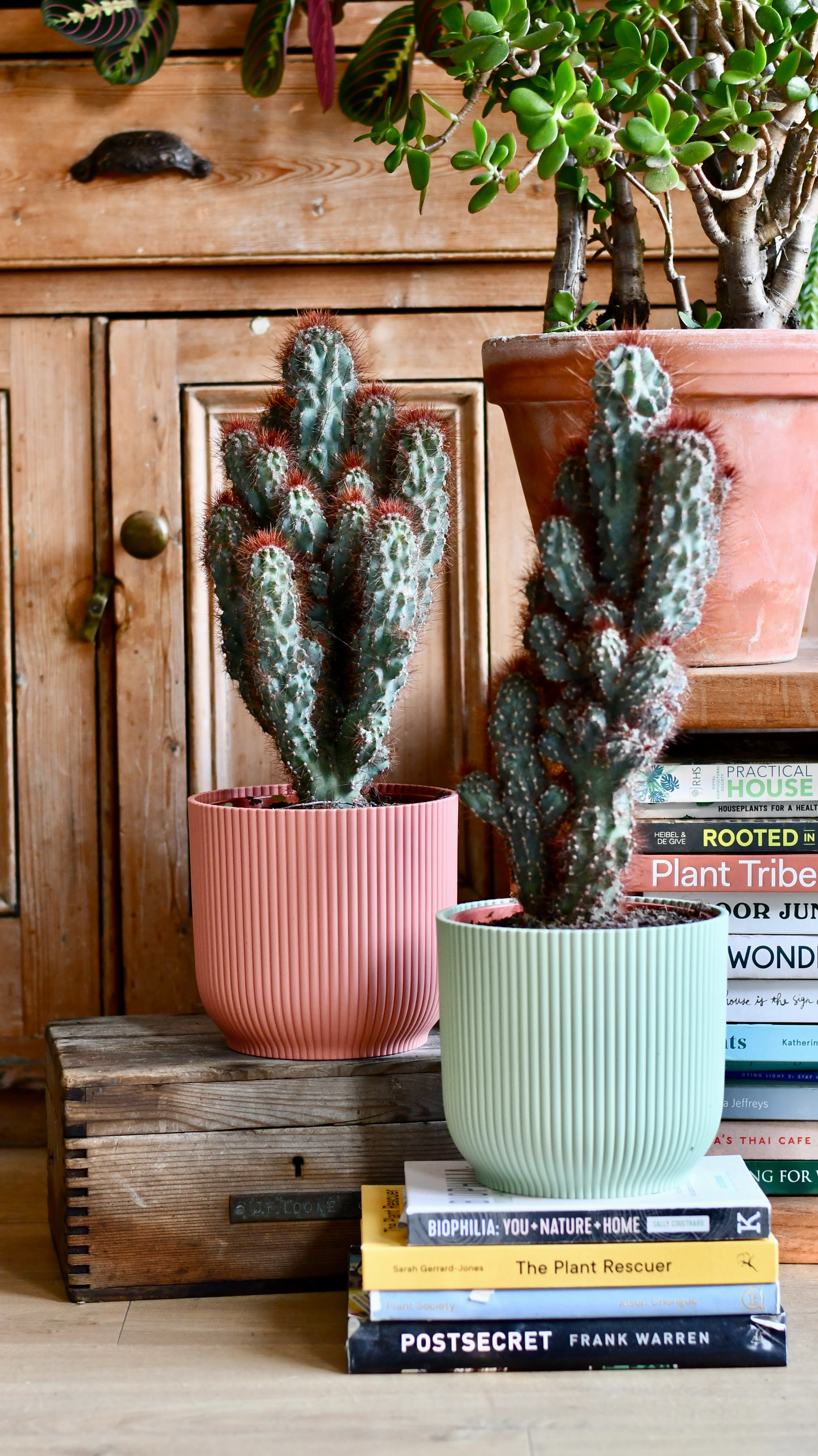
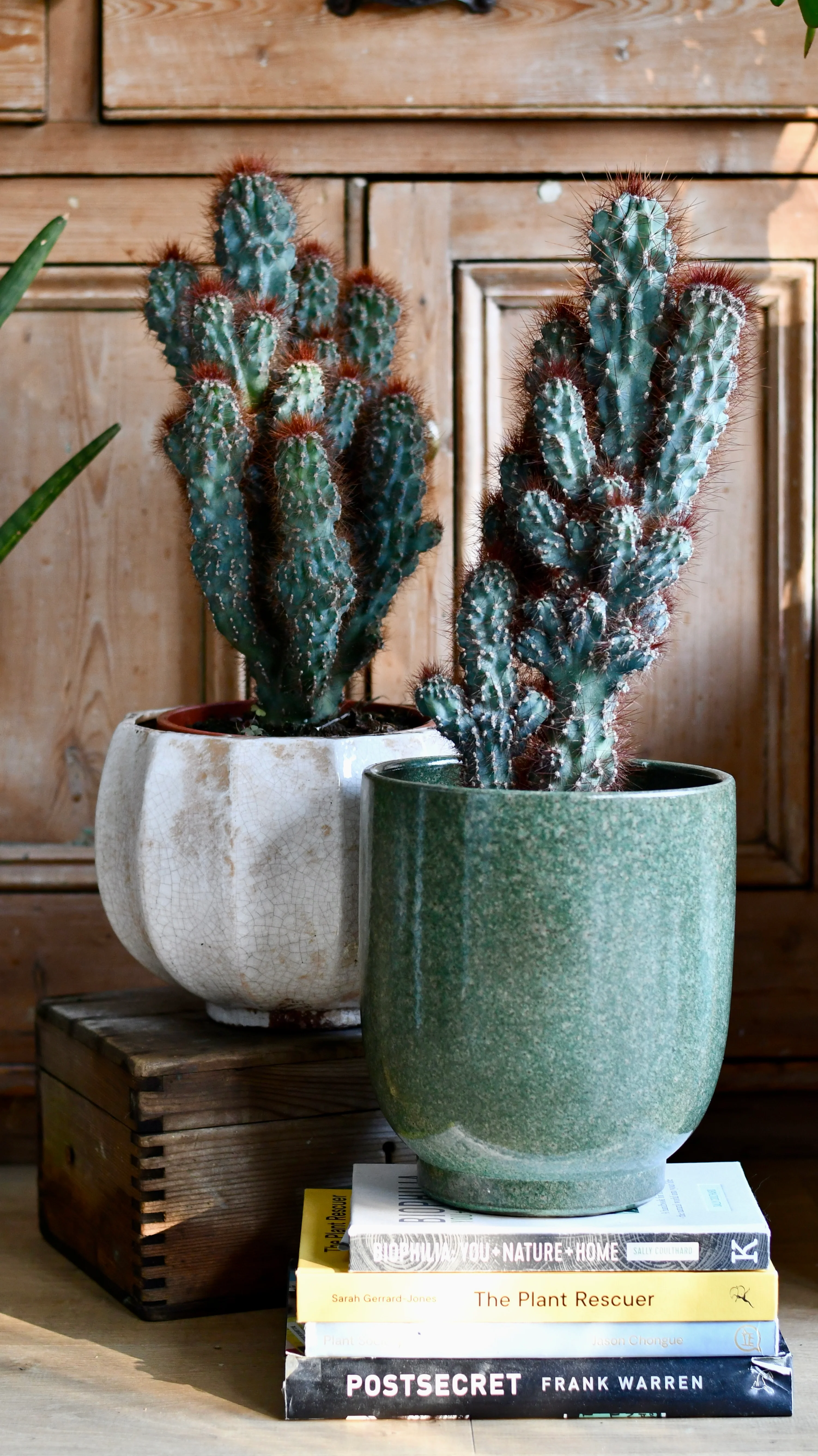
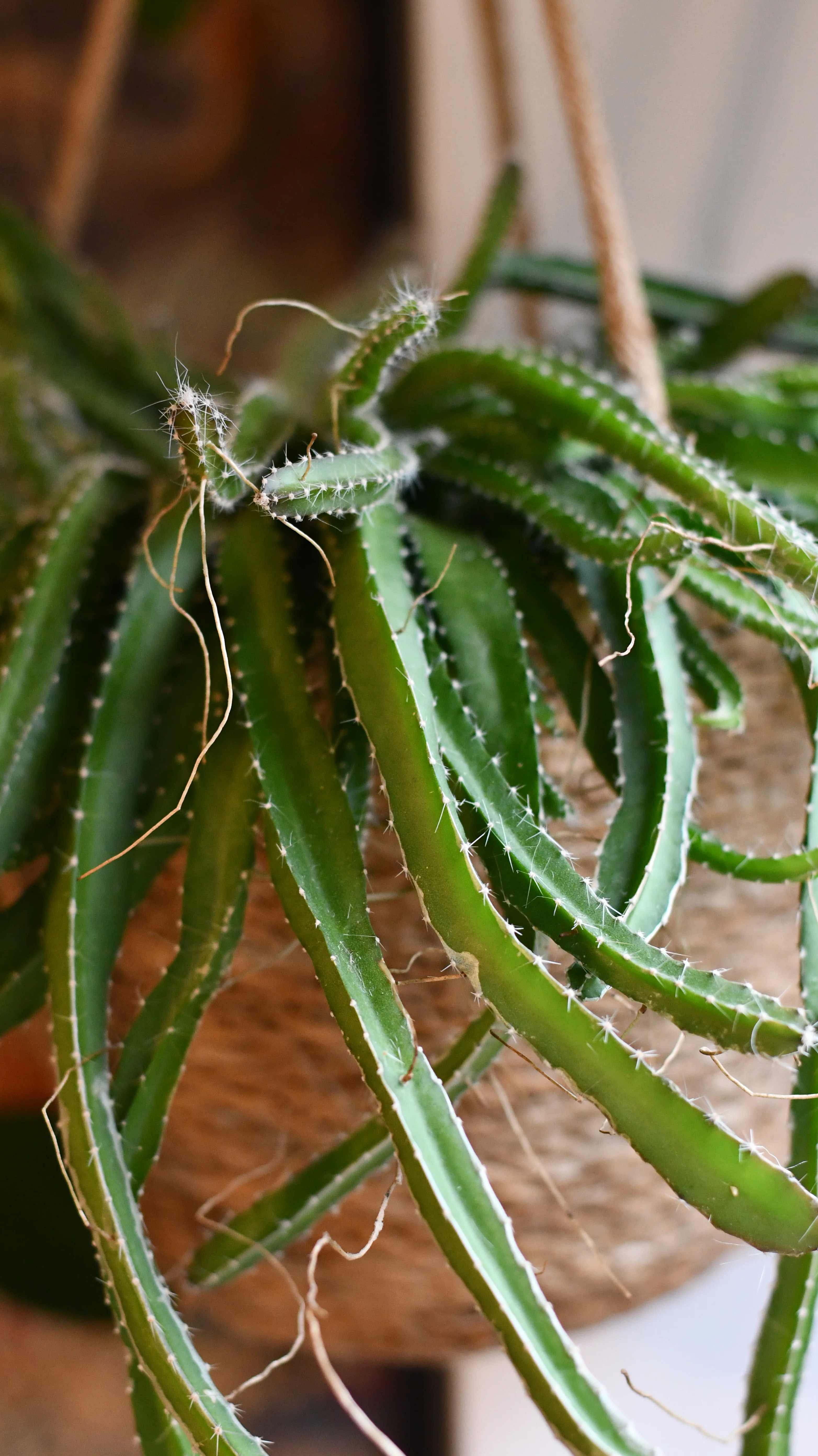
Hylocereus undatus, commonly known as the Dragon Fruit Cactus, is a sculptural, architectural houseplant with long, flattened green stems that bring a softer, more tropical take on cactus form. Unlike desert cacti, this species feels fluid and expressive, with growth that trails, climbs and gently reaches for the light. Supplied in a 14cm pot, it already has weight and presence, making it an easy way to introduce structure without harshness.
Despite its name, this is not a spiky, static plant. In the home, Hylocereus develops a relaxed, almost architectural rhythm, with segmented stems that naturally arc and spill. It suits people who like plants with movement — ones that don’t sit rigidly but slowly shape themselves around their space.
Although best known for producing dragon fruit in warm outdoor climates, indoors it’s chosen for its form rather than fruit. That distinction matters. This is a plant grown for texture, silhouette and longevity, not novelty. Over time, it becomes more characterful rather than simply bigger.
Native habitat and growth pattern
Hylocereus undatus originates from tropical regions of Central America, where it grows as an epiphytic cactus, climbing trees and rocky outcrops in warm, bright conditions. Unlike desert cacti, it experiences regular rainfall followed by periods of drying out.
Indoors, it grows steadily rather than quickly. New stem segments emerge from the tips, gradually extending and branching. With maturity, the plant becomes increasingly sculptural, especially when given space or light support to grow naturally.
Styling at home
This plant works best when allowed to express its natural shape.
• Trail from shelves or plant stands
• Train gently up a moss pole or minimalist frame
• Use as a soft architectural feature in bright rooms
• Pair with simple ceramic, stone or terracotta pots
Care guide
Light requirements
Prefers bright light, including some direct morning or afternoon sun. A bright windowsill is ideal. Low light will lead to weak, stretched growth.
Watering
Allow the compost to dry out most of the way between waterings. Water thoroughly, then drain fully. Reduce watering significantly in winter.
Feeding
Feed once a month in spring and summer using a gentle fertiliser. Our Happy Houseplants Original Vegan Plant Food supports healthy, balanced growth without forcing softness.
Temperature
Enjoys warmth and dislikes cold draughts. Keep above 12°C.
Pet safety
Not considered highly toxic, but the stems may cause irritation if chewed. Best kept out of reach of pets.
Propagation
Very easy to propagate from stem cuttings. Allow cut ends to dry for a few days before planting.
Why choose this plant?
This is a cactus for people who want structure without severity. It’s architectural but relaxed, distinctive without being demanding. A plant that rewards patience and space, slowly growing into a form that feels intentional and considered rather than decorative for decoration’s sake.
Interesting facts
• Despite being a cactus, it is native to tropical forests
• Its flowers open at night and are pollinated by moths and bats in the wild
• Commercial dragon fruit comes from mature outdoor plants of this species
FAQs
Is this suitable for beginners?
Yes, provided it has good light and drainage.
Will it produce fruit indoors?
Very unlikely. It’s best chosen for form rather than harvest.
Does it need support?
Not essential, but optional. It can trail or climb depending on how you style it.
Explore more
Discover more Rare Houseplants or read the Happy Houseplants blog for styling tips and care guides.
Original: $66.50
-70%$66.50
$19.95Product Information
Product Information
Shipping & Returns
Shipping & Returns
Description
Hylocereus undatus, commonly known as the Dragon Fruit Cactus, is a sculptural, architectural houseplant with long, flattened green stems that bring a softer, more tropical take on cactus form. Unlike desert cacti, this species feels fluid and expressive, with growth that trails, climbs and gently reaches for the light. Supplied in a 14cm pot, it already has weight and presence, making it an easy way to introduce structure without harshness.
Despite its name, this is not a spiky, static plant. In the home, Hylocereus develops a relaxed, almost architectural rhythm, with segmented stems that naturally arc and spill. It suits people who like plants with movement — ones that don’t sit rigidly but slowly shape themselves around their space.
Although best known for producing dragon fruit in warm outdoor climates, indoors it’s chosen for its form rather than fruit. That distinction matters. This is a plant grown for texture, silhouette and longevity, not novelty. Over time, it becomes more characterful rather than simply bigger.
Native habitat and growth pattern
Hylocereus undatus originates from tropical regions of Central America, where it grows as an epiphytic cactus, climbing trees and rocky outcrops in warm, bright conditions. Unlike desert cacti, it experiences regular rainfall followed by periods of drying out.
Indoors, it grows steadily rather than quickly. New stem segments emerge from the tips, gradually extending and branching. With maturity, the plant becomes increasingly sculptural, especially when given space or light support to grow naturally.
Styling at home
This plant works best when allowed to express its natural shape.
• Trail from shelves or plant stands
• Train gently up a moss pole or minimalist frame
• Use as a soft architectural feature in bright rooms
• Pair with simple ceramic, stone or terracotta pots
Care guide
Light requirements
Prefers bright light, including some direct morning or afternoon sun. A bright windowsill is ideal. Low light will lead to weak, stretched growth.
Watering
Allow the compost to dry out most of the way between waterings. Water thoroughly, then drain fully. Reduce watering significantly in winter.
Feeding
Feed once a month in spring and summer using a gentle fertiliser. Our Happy Houseplants Original Vegan Plant Food supports healthy, balanced growth without forcing softness.
Temperature
Enjoys warmth and dislikes cold draughts. Keep above 12°C.
Pet safety
Not considered highly toxic, but the stems may cause irritation if chewed. Best kept out of reach of pets.
Propagation
Very easy to propagate from stem cuttings. Allow cut ends to dry for a few days before planting.
Why choose this plant?
This is a cactus for people who want structure without severity. It’s architectural but relaxed, distinctive without being demanding. A plant that rewards patience and space, slowly growing into a form that feels intentional and considered rather than decorative for decoration’s sake.
Interesting facts
• Despite being a cactus, it is native to tropical forests
• Its flowers open at night and are pollinated by moths and bats in the wild
• Commercial dragon fruit comes from mature outdoor plants of this species
FAQs
Is this suitable for beginners?
Yes, provided it has good light and drainage.
Will it produce fruit indoors?
Very unlikely. It’s best chosen for form rather than harvest.
Does it need support?
Not essential, but optional. It can trail or climb depending on how you style it.
Explore more
Discover more Rare Houseplants or read the Happy Houseplants blog for styling tips and care guides.